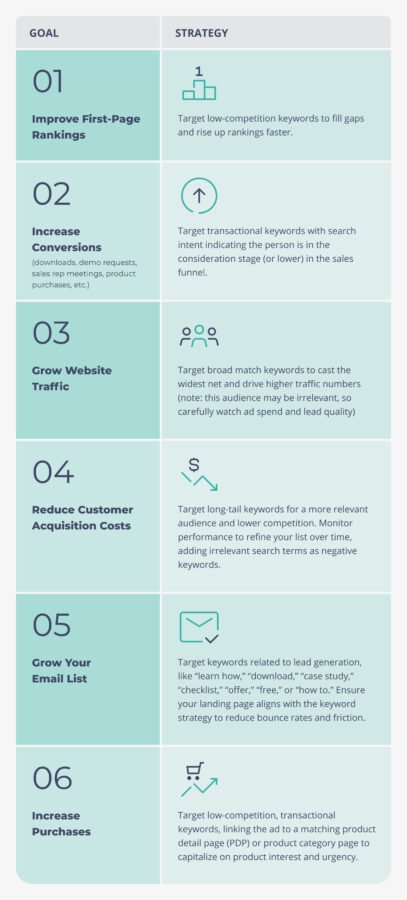
In today's crowded digital landscape, simply having great content isn't enough. You need to connect that content with the people actively searching for it. That's where a comprehensive keyword strategy becomes your indispensable guide, acting as the crucial bridge between what your audience seeks and what your business offers. It's a structured plan, deeply rooted in customer insights and search intent, designed to elevate your content, attract the right audience, and ultimately, drive your business goals.
Moving beyond a simple list of popular terms, a robust keyword strategy delves into the heart of user behavior, pain points, and the stages of their buyer's journey. It's about understanding the "why" behind every search, giving you the power to craft content that doesn't just rank, but truly resonates.
At a Glance: Crafting Your Keyword Masterplan
- Define Your Destination: Start with clear business and SEO objectives and a solid grasp of your target audience.
- Tools of the Trade: Leverage powerful keyword research tools (Google Keyword Planner, Semrush, Ahrefs, etc.) to uncover valuable data.
- Learn from the Best (and Worst): Analyze competitors to spot opportunities and refine your approach.
- Audit Your Own Backyard: Review your existing content's performance to identify strengths and areas for improvement.
- Group for Power: Organize keywords into logical topics and clusters, building topical authority.
- Prioritize Smart: Balance keyword difficulty with search volume and user intent.
- Ignite Content Ideas: Use research and customer insights to fuel your content creation.
- Best Practices are Your Secret Sauce: Focus on search intent, long-tail keywords, and natural integration.
- Measure, Adapt, Thrive: Continuously track performance and refine your strategy.
- Bust the Myths: Avoid outdated tactics like keyword stuffing; focus on human-first content.
Why Keywords Matter: Beyond Just Words
At its core, a keyword strategy is about relevance. Google's primary mission is to deliver the most relevant and complete response to any search query, processing over 378 million queries every single hour. Your content's job is to be that answer. Without a clear strategy, you risk creating content that lives in a vacuum, unseen by the very people it's meant to help.
Think of it this way: your audience has questions, problems, or desires. They express these through specific words and phrases. Your business has solutions. A comprehensive keyword strategy ensures your solutions are presented using the exact language your audience uses, making it easy for search engines to connect them.
Understanding Search Intent: The Core of Relevance
Before you even think about terms, you must understand the intent behind a search. Is someone looking for information, trying to buy something, or navigating to a specific site? Google prioritizes content that perfectly matches this intent.
Here are the four primary types of search intent:
- Informational: The user wants to learn something.
- Examples: "how to bake sourdough," "what is blockchain," "best hiking trails near me."
- Navigational: The user is trying to reach a specific website or online destination.
- Examples: "Notion login," "Amazon customer service," "facebook.com."
- Transactional: The user is ready to make a purchase or complete an action.
- Examples: "buy CRM software," "cheap flights to London," "sign up for free trial."
- Commercial Investigation: The user is researching a product or service for a future purchase, often comparing options.
- Examples: "Trello vs Asana," "best laptops for video editing," "review of HubSpot CRM."
Aligning your content with the correct intent is non-negotiable. An informational blog post won't satisfy a transactional query, and vice versa.
Your Strategy's North Star: Three Core Goals
Every successful keyword strategy is built upon three fundamental objectives:
- Find the Right Words: Unearth the phrases and terms people are actively searching for that directly align with your content focus and expertise.
- Narrow to Relevance: Filter that initial list down to keywords that are not only popular but also highly relevant to your specific business, its services, or its products.
- Finetune for Rankability: Refine your list further, prioritizing terms where you realistically stand a chance to rank, considering the competitive landscape and your current authority.
The Unmistakable Benefits of a Keyword Strategy
Investing time in developing a solid keyword strategy pays dividends across your entire marketing effort:
- Efficiency: It frames your entire content blueprint, ensuring every piece of content serves a purpose and targets a specific query. No more wasted effort on irrelevant topics.
- Customer-Centered: You gain deep insights into your audience's needs, questions, and pain points, allowing you to create truly valuable content.
- Successful Traffic Generation: You unearth phrases with higher traffic potential, drawing in visitors who are genuinely interested in what you offer.
- Competitive Edge: It reveals gaps in the market and opportunities to position your content more effectively than competitors, helping you capture their missed traffic.
- Targeted Leads: By directing the right audience to the right pages, you generate more relevant leads and improve conversion rates.
- Optimized Paid Search: A strong keyword foundation also enhances your paid ad campaigns, improving targeting and often reducing cost-per-click.
Building Your Blueprint: The 10 Steps to a Comprehensive Keyword Strategy
Ready to build your roadmap to better search visibility? Let's dive into the practical steps.
Step 1: Define Your Business and SEO Objectives
Before you research a single keyword, get crystal clear on what you want to achieve. Are you aiming for:
- Increased brand awareness?
- More website traffic?
- Higher lead generation?
- Direct sales/conversions?
- Improved customer support (reducing support tickets)?
Your objectives will dictate the types of keywords you pursue and the content you create. Simultaneously, define your target audience. Who are they? What are their demographics, interests, and pain points? What problems do they need solved? This understanding is foundational for selecting keywords that resonate.
Step 2: Craft an Action Plan
A strategy without a plan is just a wish. Outline the specific tasks, assign responsibilities within your team, decide on the necessary tools (we'll cover these next), and set realistic deadlines. This step ensures accountability and keeps your keyword efforts organized and on track.
Step 3: Gather Your Keyword Data (The Right Tools for the Job)
Now for the fun part: digging for gold! You'll need reliable tools to uncover keywords, analyze their potential, and understand the competitive landscape.
Here are some essential tools and the metrics to look for:
- Google Keyword Planner: Free with a Google Ads account, it provides search volume ranges, competitiveness, and related terms. A great starting point for understanding broad appeal.
- Semrush: A powerful all-in-one platform offering competitor analysis, keyword difficulty, detailed search volume, content gap analysis, CPC data, related questions, and pillar topic ideas. Its "Keyword Magic Tool" and "Low-Hanging Fruit" tab are excellent for spotting opportunities.
- Ahrefs Keywords Explorer: Known for its accurate keyword difficulty scores, extensive search volume data, and the ability to manage keyword lists, analyze backlinks, and monitor trends. It also groups terms under "parent topics," which is invaluable for content clustering.
- Moz Keyword Explorer: Offers insights into domain and page authority, provides keyword recommendations, and conducts ranking and SERP analysis.
- Serpstat: A comprehensive tool for keyword research, trend analysis, clustering, intent analysis, competitor tracking, and site audits.
- Keyword Tool: Specializes in long-tail keyword recommendations by scraping Google Autocomplete, giving you insights into specific phrases.
- Answer The Public: A fantastic visual tool for exploring questions, prepositions, comparisons, and alphabetical variations related to your main keywords. It helps you understand the full spectrum of user queries.
- AI Tools (e.g., ChatGPT, Bard): Can be excellent for initial brainstorming of keyword lists, generating topic ideas, and even assisting with competitor analysis by summarizing key themes.
Metrics to consider holistically: - Monthly Search Volume: How many times a term is searched on average each month.
- Keyword Difficulty (KD/KC): A score (usually 0-100) indicating how challenging it would be to rank in the top 10 for that keyword.
- Relevancy: How closely the keyword aligns with your business, products, or services.
- Related Keywords & Variations: Broader terms and semantic alternatives that can enrich your content.
- Cost-Per-Click (CPC): (If considering paid search) An indication of commercial intent.
Step 4: Uncover Competitor Goldmines
Your competitors are already investing in SEO – learn from their efforts! Analyzing what's working for them (and what's not) can reveal massive opportunities.
- Use tools like Ahrefs' Site Explorer or Semrush's "Keyword Gap" tool. These allow you to plug in competitor URLs and see which keywords they rank for that you don't.
- Examine their top-performing pages: What topics do they cover? What's their estimated traffic? How is their content structured (headings, subheadings)? What questions do they answer? What content format do they use (blog post, guide, comparison)?
- Reverse-engineer their approach: Don't just copy; aim to create something better. Can you produce more in-depth content, offer fresh insights, make it more engaging, or answer a broader range of questions? For instance, Moneta Group famously increased its relevant keyword portfolio by 326% through diligent competitor research, showing the power of this step.
Step 5: Audit Your Current Keyword Performance
Before you create new content, understand how your existing content is performing.
- Google Search Console (GSC): This is your direct line to Google. Check the Performance report to see which keywords you're already getting impressions and clicks for, and your average ranking positions. Identify unexpected ranking terms and areas for improvement.
- Google Analytics: Dive into your organic traffic data. Which content themes and formats bring in the most visitors? What are their conversion rates? This helps you understand what's already resonating with your audience.
- SE Ranking or Ahrefs/Semrush: These tools can track all the keywords your site ranks for, monitor position changes over time, and identify "low-hanging fruit"—pages that are ranking relatively well (e.g., positions 6-20) but could reach the top 5 with a bit of optimization.
- Technical SEO Audit: Don't overlook technical issues. Identify and prioritize problems like slow page speed, broken links (404s), or crawl errors that might be hindering your current keyword performance.
Step 6: Organize Keywords into Topics and Clusters
Random keywords lead to random content. To build topical authority and improve your chances of ranking for competitive terms, you need to organize your keywords.
- Group related keywords around a main "content pillar" topic. For example, "project management software" could be a pillar, with supporting cluster content on "best free project management tools," "Agile project management techniques," and "project management software comparison."
- Tools like Ahrefs can automatically group terms under parent topics, indicating which keywords are best targeted on a single page versus needing dedicated content.
- Look for keywords with rising search volume (often marked as "Growth" in tools like Ahrefs). These signals indicate emerging trends and can be excellent opportunities to establish topical authority early. This clustering approach helps search engines understand the breadth and depth of your expertise, leading to better rankings across a range of related terms.
Step 7: Prioritize for Impact: Difficulty & Volume
You've got a list, now you need to decide which keywords to target first. This requires balancing two key factors:
- Keyword Difficulty (KD): Remember that 0-100 score? For newer or growing websites, it's wise to target less competitive terms (e.g., KD 0-30) initially. As your site gains authority, you can gradually tackle more challenging keywords.
- Monthly Search Volume: While attractive, high-volume keywords are often highly competitive. Don't dismiss lower-volume, long-tail keywords. They attract niche audiences with stronger intent and often higher conversion rates.
- Pro Tip: Aim for a strategic mix. Target some high-volume, competitive terms for long-term ambition, but also focus on a healthy number of long-tail keywords. Long-tail keywords can help you rank for those broader, higher-volume terms over time by establishing your authority across many related, specific topics. This comprehensive approach is key to improving your long-term ranking potential, helping you explore list generation limits for your content.
Step 8: Spark Content Ideas from Your Research
Your keyword research isn't just for SEOs; it's a goldmine for content creators. Collaborate with customer-facing teams and use these methods to generate compelling content ideas:
- Customer Support & FAQs: Export common questions from support tickets or chat logs. These are direct indicators of what your audience needs help with.
- Internal Site Search: Analyze what users are typing into your website's search bar. This reveals gaps in your existing content.
- Competitor Analysis: As mentioned, identify their top-performing articles and see if you can create a more comprehensive or unique version.
- Google Autofill & "People Also Ask" (PAA): Type your main keywords into Google and observe the autocomplete suggestions and the "People Also Ask" box. These are direct questions Google sees as relevant. Incorporate them as H2s/H3s or a dedicated FAQ section.
- Google Alerts: Set up alerts for your core topics and competitor mentions to stay abreast of trends and news.
- AnswerThePublic: Use this tool to visually explore a web of questions, prepositions, and comparisons related to your keywords.
- Sales Team Transcripts: If you record sales calls, search transcripts for repeated words, phrases, and objections. These are direct customer pain points.
- Map to Buyer's Journey: Once you have ideas, assess their search and business potential, then map them to the appropriate stages of the buyer's journey:
- Awareness: Blog posts, guides, infographics (e.g., "what is X").
- Consideration: Comparison articles, expert interviews, webinars (e.g., "X vs. Y," "best X for Z").
- Decision: Product pages, case studies, pricing guides (e.g., "buy X," "X free trial").
Step 9: Implement Smart Keyword Best Practices
With your keywords selected and content ideas flowing, it's time to ensure your implementation is effective and aligned with modern SEO.
- Evaluate Search Results (SERP Analysis): Before you write, study the top-ranking sites for your target keyword. What content format do they use (listicle, long-form guide, video)? What types of headings? What is their overall tone? This helps you understand Google's preferences and your competition.
- Match Keyword to Search Intent: Reiterate this point. Your content must directly answer the informational, navigational, transactional, or commercial investigative intent behind the search. Misalignment here is a fast track to low rankings and high bounce rates.
- Address Real Pain Points: Connect your chosen keywords to the actual problems your target audience is trying to solve. If your content genuinely helps, it will naturally perform better.
- Map Keywords to the Sales Funnel: Ensure content types align with the buyer's journey stages. An "awareness" keyword belongs in a blog post, while a "decision" keyword is for a product or service page.
- Use Long-Tail Keywords: These longer, more specific phrases (e.g., "best budget laptop for graphic design students" vs. "laptops") attract 1.76% more clicks, bring visitors with stronger intent, and are typically less competitive. They're critical for capturing highly qualified traffic.
- Target Question-Based Keywords: Phrases starting with "how to," "what is," "why," "when," or "where" are excellent for earning featured snippets or appearing in Google's "People Also Ask" section.
- Include Comparison Keywords ("vs."): Content comparing products or services (e.g., "HubSpot vs. Salesforce") performs exceptionally well, especially when presented with simple, easy-to-read tables comparing features and pricing.
- Monitor Google's AI Overview: If available in your region, pay attention to the answers provided by Google's AI Overview and the linked sources. This can offer insights into what Google considers authoritative and comprehensive. Consider mirroring the structure and using schema markup to help your content get featured.
- Use Keywords Naturally (Avoid Stuffing): This is paramount. Write for humans first, not algorithms. Integrate your keywords genuinely, smoothly, and in a way that enhances readability. Aim for a natural density (often cited below 3%, but focus on flow, not a number). Use semantic synonyms and related terms to enrich your content without repetition. Keyword stuffing is an outdated tactic and is against Google's spam policies.
Step 10: Measure, Adapt, and Conquer
A keyword strategy isn't a one-and-done project; it's an ongoing cycle of tracking, analysis, and optimization. The digital landscape—customer needs, phrasing, and search algorithms—is constantly evolving.
- Google Search Console: Your primary tool for monitoring. Keep an eye on keyword performance (impressions, clicks, average ranking), identify new keywords you're unexpectedly ranking for, and spot opportunities for quick wins.
- Ahrefs or Semrush Position Tracking: Set up campaigns to track your keyword rankings across your entire site or specific URLs. Monitor daily or weekly movements, identify traffic shifts, and pinpoint underperforming content that needs an update. These tools also allow you to break down performance by device, location, and intent, and to compare your progress against competitors.
- Google Analytics: Continue to monitor organic traffic, bounce rates, time on page, and conversion rates related to your target keywords and content.
Regularly revisit your keyword list, update outdated content, and create new pieces based on emerging trends and competitive shifts. This iterative process ensures your keyword strategy remains sharp and effective.
Busting Common Keyword Strategy Myths
Don't fall prey to outdated advice or misconceptions that can derail your SEO efforts.
Myth 1: You need to stuff keywords and hit a specific keyword density.
Reality: This is perhaps the most persistent and damaging myth. Google's "Helpful Content Update" and other algorithm changes emphatically prioritize quality, relevance, and user experience. Writing for a machine by shoehorning keywords into every sentence makes your content unreadable and risks penalty. Instead, focus on providing comprehensive, helpful answers to user queries, and naturally incorporate your primary and secondary keywords where they make sense. Write for humans, not for an arbitrary percentage.
Myth 2: Obsessing over exact keyword matching is crucial.
Reality: While including your target keyword is important, Google's algorithm has become incredibly sophisticated at understanding context and inferring search intent. It understands synonyms, related terms, and natural language. You don't need to use the exact phrase repeatedly. Vary your keyword usage, incorporate semantic relatives, and prioritize delivering a complete answer to the user's underlying question, regardless of their exact phrasing.
Myth 3: You should strictly prioritize high-volume keywords.
Reality: High-volume keywords are indeed attractive, but they are also highly competitive. New or growing sites often struggle to rank for these broad terms. A balanced strategy that includes a healthy mix of high-volume, aspirational keywords and specific, lower-volume, long-tail keywords is far more effective. Long-tail keywords, while individually bringing in less traffic, can collectively attract significant, highly qualified visitors with stronger purchase intent, leading to better conversion rates.
Your Next Move: Cultivating Ongoing SEO Success
Developing a comprehensive keyword strategy is a continuous journey, not a destination. You've now got the blueprint to understand your audience, identify what they search for, and connect them with your valuable content.
By focusing on user intent, leveraging the right tools, analyzing your competitors, and consistently refining your approach based on performance data, you'll build an unstoppable engine for organic growth. Start implementing these steps, measure your progress, and watch as your content climbs the search rankings, bringing more of the right people to your digital doorstep. The future of your online visibility starts with a thoughtful, human-centered keyword strategy today.