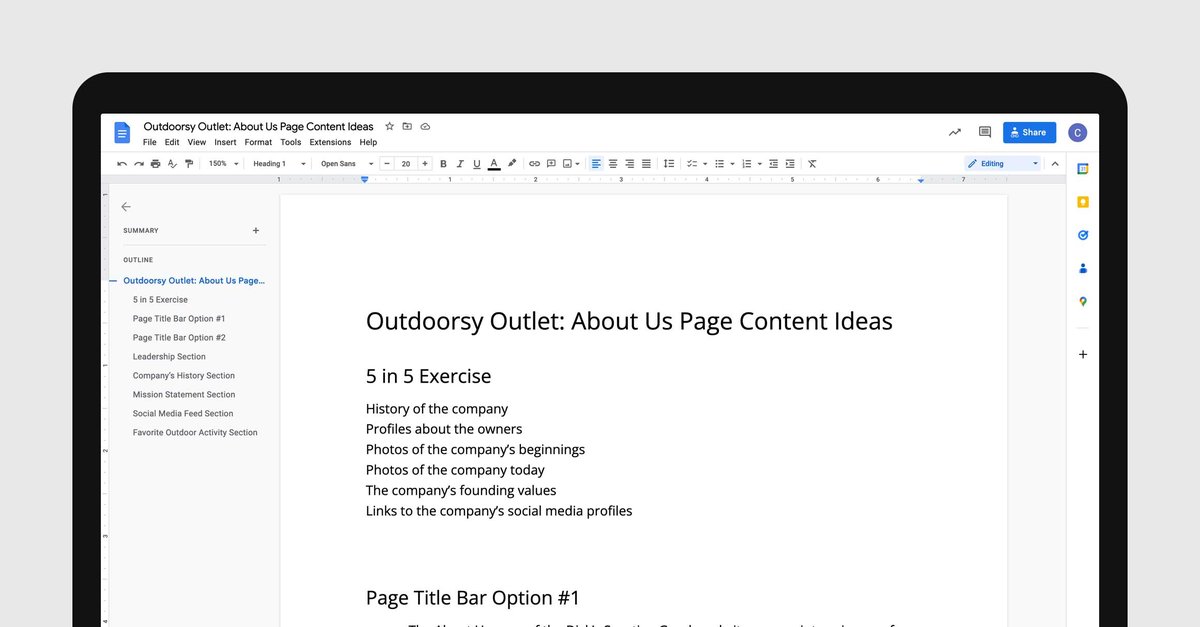
Ever found yourself staring at a blank screen, the cursor blinking accusingly, while deadlines loom like digital storm clouds? You're not alone. Content creation, at its heart, is a wellspring of ideas. But sometimes, that well runs dry. That's where Advanced Content Brainstorming steps in, transforming a frustrating chore into a strategic superpower. This isn't about conjuring random topics; it's about a systematic, creative process to generate impactful, audience-resonant content that actively drives your marketing goals.
Consider this your definitive guide to unlocking a steady stream of brilliant content concepts. We'll dive deep into principles and techniques that seasoned content strategists swear by, helping you move beyond basic keyword research to truly innovative ideation.
At a Glance: Your Brainstorming Superpowers
- Audience-First Focus: Always root ideas in what your audience truly cares about.
- Clear Intent: Define measurable goals for every piece of content you create.
- Diverse Perspectives: Leverage your team's unique viewpoints for richer ideas.
- Strategic Gaps: Uncover what your competitors miss and what your audience seeks.
- Creative Techniques: Master methods like Mind Mapping and SCAMPER for idea generation.
- Actionable Output: Prioritize, refine, and plan for seamless execution.
- Continuous Improvement: Keep adapting and exploring new trends to stay fresh.
Why "Advanced" Brainstorming? The Shift from Quantity to Quality (and Impact)
The digital landscape is saturated. Just producing more content isn't enough; you need better, more strategic content that cuts through the noise. Basic brainstorming might give you a dozen ideas, but advanced techniques ensure those ideas are not only plentiful but also deeply aligned with your brand, your audience's needs, and your business objectives. It's the difference between throwing spaghetti at a wall and meticulously crafting a gourmet meal.
This isn't about magic; it's about methodical creativity. We're building a content engine, not just finding a single spark.
The Foundation: Principles for Content That Connects
Before you even think about generating ideas, you need to lay a solid groundwork. These principles ensure your brainstorming efforts are always pointed in the right direction – towards content that resonates and performs.
Know Your Audience, Inside and Out
This isn't just demographic data; it's psychographics. What are their aspirations, their fears, their daily struggles, their ultimate desires? What questions keep them up at night? When you deeply understand your target audience's interests, pain points, and needs, every content idea naturally aligns with solving a problem or fulfilling a desire. Tools like audience personas, empathy maps, and even direct surveys can give you invaluable insights.
Define Your "Why": Set Clear, Measurable Goals
Every piece of content you create should serve a purpose. Is it to educate, entertain, inspire, or inform? Beyond that, what specific outcome are you aiming for? Increased website traffic, more email subscribers, higher conversion rates, improved brand authority, or better customer support deflection?
Before you start generating ideas, clearly define the desired outcome. This north star will guide your brainstorming, helping you evaluate ideas based on their potential impact. For instance, if your goal is to "increase lead magnet downloads by 15%," you'll naturally gravitate towards ideas like in-depth guides, templates, or exclusive webinars.
Embrace Diverse Perspectives for Richer Ideas
The echo chamber is the enemy of innovation. Brainstorming with a diverse group – not just content creators, but sales, customer support, product development, even external partners – injects a wealth of different viewpoints. Each person brings unique insights into customer interactions, industry trends, and business challenges, leading to a much richer tapestry of ideas. Encourage open dialogue and active listening, ensuring every voice is heard.
Uncover White Space: Content Gap Analysis
Why create content that already exists (and is probably done better by competitors)? A content gap analysis helps you identify topics, keywords, or formats that your competitors are covering effectively (or poorly), and more importantly, what they're not covering.
- How to do it: Use SEO tools to analyze competitor content, keyword rankings, and search volume for relevant topics. Look for queries your audience is asking that existing content doesn't fully answer. Identify areas where you can offer a unique perspective or a more comprehensive resource. This often reveals golden opportunities for highly visible and valuable content.
Build Your Inspiration Arsenal: The Marketing Swipe File
Imagine having a curated library of brilliant marketing campaigns, compelling headlines, innovative content formats, and industry trends at your fingertips. That's a swipe file. This organized collection of inspiring material acts as a wellspring for new ideas.
- What to collect: Customer support questions, social media comments, intriguing articles, competitor ads, successful email campaigns, podcast snippets, industry reports, team conversations.
- How to use it: Regularly review your swipe file. Look for patterns, identify emerging trends, and see how others have tackled similar challenges. It's not about copying; it's about sparking new connections and translating proven success strategies into your own context.
Hold Your Core: The Content Sweet Spot
Your most impactful content lives at the intersection of what your audience deeply cares about and what your company uniquely provides. This is your "Content Core." Continuously ask:
- What problems can only we solve?
- What unique expertise or data do we possess?
- How can our solutions genuinely improve our audience's lives or businesses?
Sticking to this core ensures authenticity and establishes your brand as a trusted authority.
Techniques That Elevate Your Brainstorming Game
Moving beyond simple "idea dumps," these advanced techniques provide structured pathways to unlock creativity, generate a high volume of diverse ideas, and drill down to truly impactful concepts.
1. Mind Mapping for Visual Idea Exploration
How It Works: Start with a central theme or keyword. From there, branch out with subtopics, related keywords, questions, or specific angles. Each branch can then sprout further sub-branches, creating a visual network of interconnected ideas. You can use physical whiteboards, sticky notes, or digital tools like Miro, XMind, or Coggle.
Why It's Effective: This visual approach mirrors how the brain naturally makes associations. It encourages free-flowing thought, reveals hidden connections between seemingly disparate ideas, and helps you see the broader scope of a topic. It's particularly powerful when you need to generate a robust list of ideas around a complex subject.
Example:
- Central Theme: "Sustainable Home Living"
- Branch 1: Energy Efficiency
- Solar Panels: ROI, installation guide, DIY maintenance.
- Smart Thermostats: Best brands, energy savings comparison, setup tips.
- Insulation: Types, cost-benefit analysis, common mistakes.
- Branch 2: Waste Reduction
- Composting: Beginner's guide, indoor vs. outdoor, what not to compost.
- Recycling: Local guidelines, tricky items, upcycling ideas.
- Zero-Waste Kitchen: Product swaps, meal planning, bulk shopping.
- Branch 3: Eco-Friendly Products
- Cleaning Supplies: DIY recipes, non-toxic brands, greenwashing.
- Furniture: Second-hand finds, sustainable materials, ethical brands.
- Gardening: Organic pest control, native plants, rainwater harvesting.
2. Rapid Ideation: Quantity Over Perfection (Initially)
How It Works: Set a strict timer (5-10 minutes) and have everyone (or just yourself) furiously write down as many content ideas as possible without any judgment or evaluation. The goal is sheer volume. Once the timer is up, then you review, refine, and eliminate.
Why It's Effective: This method breaks through creative blocks and self-censorship. By forcing speed and quantity, it bypasses the inner critic, allowing spontaneous, raw ideas to surface. It's excellent when you need to create extensive topic lists quickly before filtering for the best ones.
3. Round Robin: Structured Group Creativity
How It Works: In a group setting, each person takes a turn sharing one content idea. They can either build upon an idea previously shared by someone else or introduce an entirely new concept. This continues around the circle until everyone has contributed multiple times or ideas start to wane.
Why It's Effective: It ensures equal participation, preventing dominant personalities from monopolizing the discussion. It also encourages "idea piggybacking," where one person's thought sparks a related or improved idea in another. This collaborative approach leads to a rich diversity of perspectives.
4. Brainwriting / Brain-netting: The Power of Silent Collaboration
How It Works:
- Brainwriting (in-person): Participants silently write down 3-5 ideas on a sheet of paper. After a few minutes, they pass their paper to the person next to them, who then adds more ideas or builds on the existing ones. This continues for several rounds.
- Brain-netting (remote): The same concept, but using a shared digital document (e.g., Google Docs, Mural, Trello board). Everyone adds their ideas simultaneously and silently, then reviews and adds to others' contributions.
Why It's Effective: This technique is fantastic for introverts or teams where some members might feel hesitant to speak up in a vocal brainstorming session. It guarantees equal contribution from everyone, leading to a broader array of ideas without the pressure of on-the-spot verbalization. It's particularly useful for building a comprehensive inventory of content opportunities where everyone can contribute without interruption, helping you to build a comprehensive inventory of content opportunities.
5. Reverse Brainstorming: Solving Problems in Reverse
How It Works: Instead of asking "How can we create great content about X?", ask "How could we create terrible content about X?" or "What would make our audience hate our content about X?" Once you've identified all the potential pitfalls, problems, or negative aspects, you then reverse them into positive content ideas or solutions.
Why It's Effective: It flips traditional thinking on its head, often revealing unexpected angles and solutions. By focusing on what not to do, you gain a clearer picture of what to do, leading to unique and highly effective content strategies that proactively address potential audience frustrations.
Example:
- Topic: "Online Course Marketing"
- Reverse Brainstorm: "How to make an online course absolutely fail?"
- Ideas: Offer no value, make it super boring, confusing interface, charge too much, bad customer support, no promotion, generic content, terrible video quality.
- Positive Content Ideas (Reversed):
- "The Ultimate Guide to Creating High-Value Online Course Content"
- "7 Engaging Formats to Boost Your Online Course Completion Rates"
- "How to Price Your Online Course Competitively (and Fairly)"
- "Mastering Customer Support for Your Online Learning Platform"
- "Beyond the Launch: Advanced Strategies for Promoting Your Online Course"
6. The SCAMPER Technique: Iterating on Existing Ideas
How It Works: SCAMPER is an acronym that guides you through seven thinking processes to generate new ideas from existing ones:
- Substitute: What can you substitute in your existing content? (e.g., substitute a blog post for a video script)
- Combine: What can you combine with other content or ideas? (e.g., combine two related topics into an ultimate guide)
- Adapt: What can you adapt from another industry or format? (e.g., adapt a successful podcast series into a written eBook)
- Modify (Magnify/Minify): What can you modify, magnify, or minify? (e.g., magnify a specific section of an article into a standalone deep dive, minify a long report into an infographic)
- Put to another use: How can you use your existing content differently? (e.g., repurpose webinar content into a series of social media posts)
- Eliminate: What can you eliminate or simplify? (e.g., remove jargon, simplify a complex process into a simple checklist)
- Reverse (or Rearrange): What can you reverse or rearrange? (e.g., tell a story from the end to the beginning, present a counter-intuitive argument).
Why It's Effective: SCAMPER is excellent for getting more mileage out of existing assets or for creatively evolving a nascent idea. It's a structured way to think "outside the box" when you're feeling stuck, especially when you need to produce a substantial list of options for content repurposing.
7. The 5 Whys: Uncovering Root Causes for Deeper Content
How It Works: Start with a content topic or problem. Then, ask "Why?" five times (or as many times as it takes) to drill down to the root cause or core implication. Each answer becomes the basis for the next "Why."
Why It's Effective: This technique is superb for moving beyond superficial content ideas to topics that address the fundamental issues or motivations of your audience. It helps you uncover truly valuable insights that can form the basis of unique, problem-solving content.
Example:
- Initial Topic: "Website traffic is low."
- Why? Our content isn't ranking well.
- Why? We're not targeting the right keywords, or our content isn't optimized.
- Why? We don't have a clear SEO strategy, and our keyword research is basic.
- Why? Our team lacks expertise in advanced keyword research and SEO content planning.
- Why? We haven't invested in proper training or specialized tools.
- Content Ideas from 5 Whys:
- "The Ultimate Guide to Advanced Keyword Research for SaaS Companies"
- "Building a Scalable SEO Content Strategy: A Step-by-Step Blueprint"
- "Choosing the Right SEO Tools: A Comparative Review"
- "Training Your Team: In-House SEO Certification Program Outline"
- "Beyond Basic Keywords: Identifying Long-Tail Opportunities for B2B"
Post-Brainstorming: From Idea Burst to Action Plan
Generating a fantastic list of ideas is only half the battle. The next crucial step is to refine, prioritize, and plan for execution. Without this, even the most brilliant ideas will simply languish.
Prioritize and Refine: Filter for Impact
You'll likely emerge from your advanced brainstorming session with a treasure trove of ideas. Now, you need to select the most promising ones.
Decision Criteria:
- Audience Resonance: Does it genuinely address a known need or interest of your target audience?
- Business Goals Alignment: Does it contribute directly to your predefined marketing or business objectives?
- Feasibility: Do you have the resources (time, budget, expertise) to create this content effectively?
- Uniqueness/Differentiation: Does it offer a fresh perspective, a unique solution, or a distinct advantage over existing content?
- SEO Potential: Is there search volume for related keywords, and can you realistically rank for them?
- Promotability: Is the content something that can be easily shared, repurposed, or amplified across multiple channels?
Refinement: Don't just pick ideas; polish them. Turn a vague "SEO guide" into "The Definitive 2024 Guide to Technical SEO Audits for E-commerce Sites." Add specific angles, target audiences, and desired formats.
Build Your Content Factory: The Follow-Up Plan
Once ideas are prioritized, the real work of content creation begins. Establish a clear, repeatable process for execution:
- Idea Briefing: Create a detailed brief for each chosen idea, outlining the target audience, goal, key message, keywords, format, and desired call to action.
- Keyword Research & Optimization: Conduct thorough keyword research for each piece, not just for primary terms but also long-tail variations and semantic keywords.
- Assignment & Creation: Assign creators (writers, designers, videographers, etc.) and set clear deadlines.
- Review & Editing: Implement a rigorous editing and proofreading process.
- Publishing & Distribution: Schedule publication and plan for multi-channel distribution (social media, email, paid promotion).
- Performance Tracking: Define KPIs and methods for tracking the content's performance against its goals.
Remember, content creation is rarely a solo sport. A well-defined workflow ensures everyone knows their role and responsibilities.
The Ever-Evolving Journey: Continuous Improvement
Advanced content brainstorming isn't a one-time event; it's an ongoing process. The digital world is constantly shifting, and your content strategy must adapt.
- Stay Curious: Continuously monitor industry trends, observe audience behavior, and pay attention to what your competitors are doing (or not doing).
- Analyze & Learn: Regularly review the performance of your published content. What resonated? What fell flat? What new questions did it spark? Use these insights to inform future brainstorming sessions.
- Refine Your Approach: Don't be afraid to tweak your brainstorming techniques, adapt your prioritization criteria, or even adjust your content core based on new learnings.
The goal is to cultivate a culture of perpetual ideation and optimization, ensuring your content always remains fresh, relevant, and impactful. By embracing these advanced strategies, you're not just creating content; you're building a powerful engine for engagement, authority, and growth.